
Antisperm antibodies (ASA) - antibodies produced by the human body against sperm antigens (Krause 2017: 109) The formation of ASA is one of the reasons for the decrease in fertility or autoimmune infertility: ASA affect the function of spermatozoa, change the course of the acrosomal reaction (AR), and disrupt fertilization, implantation and development of the embryo (Restrepo 2013) cause DNA fragmentation (Kirilenko 2017) Studies on various animal models have shown a relationship between ASA and embryo degeneration before or after implantation (Krause 2017: 164) The contraceptive effects of ASA are being investigated during the development of the immune contraceptive vaccine for humans (Krause 2017: 251), as well as to reduce and control the wildlife population (Krause 2017: 268).
Reproductive Effects of Antisperm Antibodies
Demographic indicators of Russia and many countries indicate an increase in the frequency of infertility in men, reaching an average of 30 – 50%. The indicator of the number of reported cases of male infertility in the Russian Federation during the period 2002 – 2009 increased by 59% - from 44,1 to 70,1 on 100 000 of the adult male population, and in general its dynamics has a tendency to increase (Kirilenko 2017).
Kirilenko et al. they write: “In recent years, it has become clear that poor sperm quality is not only the reason for the absence of pregnancy, but also embryo developmental disorders, congenital malformations and even cancer in children. Of the many currently suggested causes of impaired sperm function, nuclear DNA damage is the most studied and increasingly recognized as a key factor affecting the quality of the embryo, its development and implantation. Meta-analyzes on the role of DNA fragmentation showed that the risk of spontaneous abortion and impaired fetal development is increased up to four times with increased sperm DNA fragmentation (15-30% norm, depending on the methods used), even after in vitro fertilization and intracytoplasmic sperm injection methods. The leading pathogenetic mechanism of such damage is considered to be the overproduction of reactive oxygen species - ozone, hydrogen peroxide, nitric oxide, which leads to spermatozoa OS. The most common cause of oxidative stress in the male reproductive system is infectious and inflammatory diseases and ASA in the male urogenital tract ”(Kirilenko 2017).
Other factors that cause oxidative stress and DNA damage are alcohol and drug use, smoking, obesity, stress, age, STDs associated with promiscuous sexual behavior, certain drugs, such as antidepressants, electromagnetic radiation, air pollution. The impact of all these factors is cumulative. (Pourmasumi 2017)
Many scientific publications and books state that: “Oral and rectal administration of sperm causes the formation of antisperm antibodies"(Rao 2014: 311, Lu 2008, Nikulin 2007, Bronson xnumx). Under experimental conditions, rectal insemination of rabbits with spermatozoa induces a systemic immune response (Richards et al., 1984), and the introduction of sperm into the stomach of rats leads to the production of antibodies against spermatozoa and a decrease in fertility (Allardyce, 1984). In humans, a higher prevalence of ASA has been reported in homosexual men compared with heterosexual men from infertile couples (Witkin and Sonnabend, 1983; Bronson et al., 1983). In 40–50% of homosexual men, ASA can be found in the serum (Wolff and Schill, 1985). Bronson et al. Observed a higher prevalence of IgM class ASA in homosexual men compared to IgG and IgA in the serum of heterosexual men from infertile couples. They suggested that this may reflect differences in the etiology of sperm immunity between the two groups. Intrarectal ejaculation can lead to the production of antigens, and the monolayer epithelium is much more permeable than the thick epithelium of the vagina. In addition, the population of B lymphocytes and plasma cells in the gastrointestinal tract is different from the population in the reproductive tract (Mestecky and McGhee, 1987), and their reactivity with sperm antigens may differ. It has been suggested that intrarectal ejaculation can lead to the stimulation of IgM- or IgA2-producing cells, which can then exist in the genital tract, leading to the presence of ASA of these isotypes in sperm (Bronson 2015).
A large number of partners in a woman leads to the formation of antisperm antibodies and autoimmune infertility, for example, 40 – 45% of prostitutes have ASA (Rao 2014: 311). According to Brockowski, 68% of women with a large number of partners are positive for ASA (Brokowski xnumx).
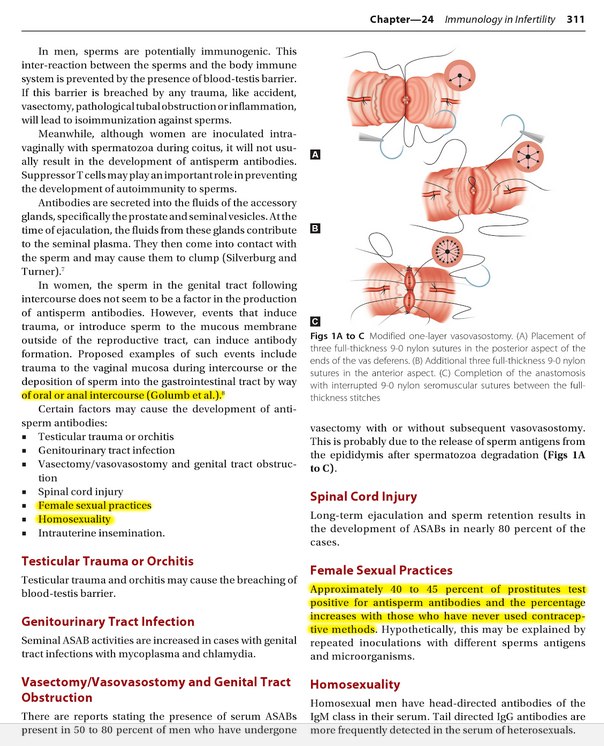
Antisperm antibodies, acting directly on the sperm, enhance the action of other factors.
One of the reasons for the formation of antisperm antibodies in women is sperm with ASA (Krause 2017: 166, Nikulin 2007), for example, the contact of a woman with a homosexual, an ASA carrier in the genital tract.
Ruziev, in the 2017 study of the year, indicates the prevalence of sexual practices in men who have sex with men (MSM) - 99% practice anal sex, and 45% combine it with oral:
“Over the last 6 months before inclusion in the study, almost all MSM (98%) had same-sex sex, with 65% the number of male partners did not exceed 5 people, 4% of men had from 6 to 10 people. During meetings with their partners, MSM practiced either only anal sex (54%) or combined it with oral (45%). Most of the respondents (44%) indicated their preference for an active role, approximately 1 / 4 (23%) - passive and 1 / 3 alternated the roles of an active and passive partner during sexual intercourse with men.
In order to constantly and regularly practice safe sex, you must always have condoms with you. Therefore, the questionnaire had the question "Do you have a condom with you and could you show it." 60% of respondents did not have it with them. About half (53%) of MSM have not entered into heterosexual contacts during the last 6 months. The rest practiced sex with women. Prior to 5, 88% had MSM partners, the rest had more than 5 partners. With their partners, MSM only practiced vaginal sex. ” (Ruziev 2017)
Gay contacts with women are confirmed by other studies. About half of gay men have sex with women (Tao 2013, Larmarange xnumx), according to other sources, 3 / 4 MSM (73%) have heterosexual contacts (Larmarange xnumx) In tolerant countries where sexual activity falls and there is no need to hide same-sex behavior, the number of contacts of homosexuals with women declining average up to xnumx% but is growing the number of LGBT people in the younger generation, due to the propaganda of homosexuality. In Russia 34% homosexuals have sex with women.
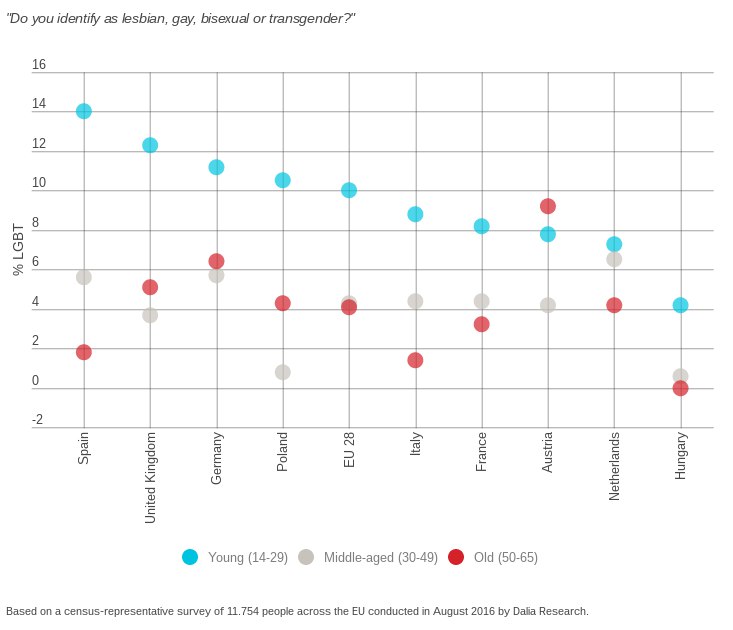
Fethers et al. give similar data in their study of lesbians: for them, the probability of sexual contact with a homosexual man was 4 times higher than for heterosexual women (Fethers 2000: 347-348).
Surrogate mothers who carry children to gay couples may experience infertility or pathologies in children due to sperm with ASA. Reproductive technologies are also a possible cause of ASA in women (Rao 2014: 311).
Anal sex promotion and population reduction

Concerns about the overpopulation of the Earth and the need to reduce the population have been repeatedly voiced on all world sites, including in scientific publications.
That's what they write in the report of the Club of Rome for 2017 year with the saying title "Come On! Capitalism, myopia, population and destruction of the planet":" On a planet with limits population growth should be cut back before nature does it herself. ”
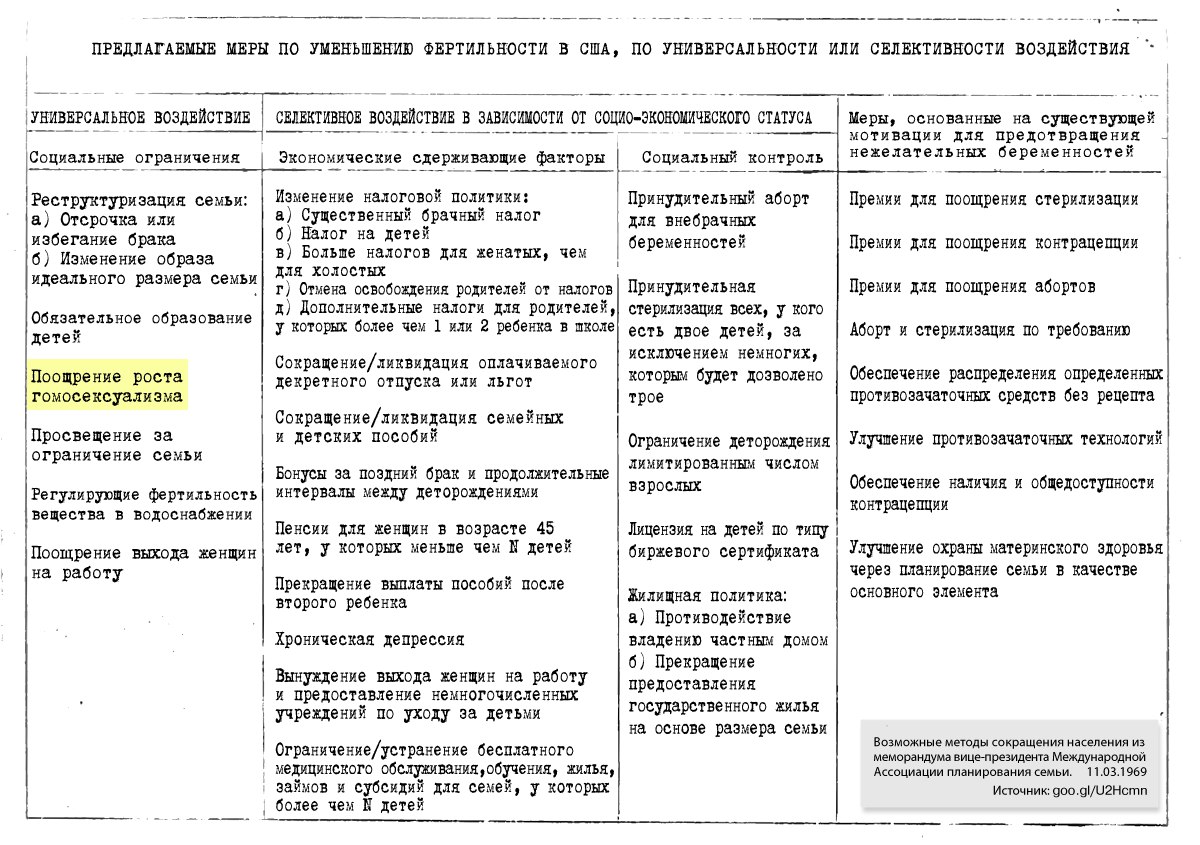
Back in 1968, an American lawyer Albert Blaustein, who participated in the creation of the constitutions of many countries, pointed outthat to limit population growth, it is necessary to revise many laws, including on marriage, family support, age of consent, and homosexuality. In 1969, in his address to Congress, President Nixon call population growth "One of the most serious problems for the fate of mankind" and called for urgent action. Preston Cloud, representing the US National Academy of Sciences, has recommended that the government legalize abortion and homosexual unions. In the same year, Frederic Jaffe, Vice President of the International Planned Parenthood Federation (IPPF), issued memorandum, wherein "encouraging the growth of homosexuality"Was listed as one of the methods of reducing the birth rate. Two years earlier, Kingsley Davis, one of the central figures in the development of birth control policy offered the promotion of "unnatural forms of sexual intercourse." Davis colleague, sociologist Judith Blake, offered abolish tax and housing benefits that encourage childbearing; and remove legal and social sanctions against homosexuality.

In 1970, Frank Naughtstein, author of the theory of demographic transition, speaking at the National Military College before senior officers, saidthat "homosexuality is advocated on the basis that it helps to reduce population growth."
The 1994 year in Cairo took place conferencewhere ways to reduce fertility were formulated.
December 6 President 2011 Barack Obama produced a directive declaring the struggle for the rights of sexual minorities abroad a priority of American foreign policy.
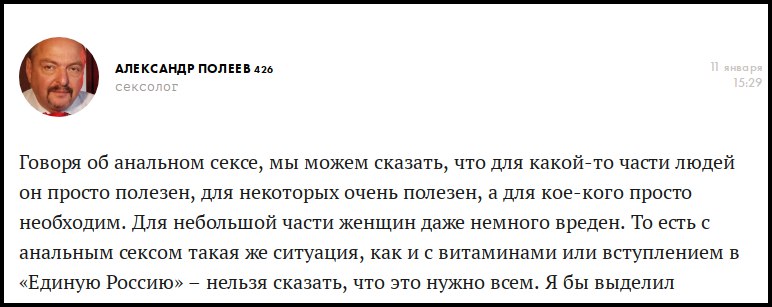
Some sexologists, for example, Alexander Moiseevich Poleev, write books about anal sex and in every way embellish its benefits and are silent about side effects. According to estimated, the number of infertile couples in Europe reaches 15%, and in Russia - 15 – 20%. According to WHO, the critical factor for demographic security is 15% of infertile couples.

Promotion of promiscuous sexual behavior, homosexuality and anal sex, leading to the formation of antisperm antibodies (ASA), transmission of HIV, HPV and other STDs, which in turn are factors of immunization against sperm antigens, pose a genetic threat to future generations, and lead to population decline , developmental pathologies of children. Suppression of disgust and work behavioral immune system - increases the number of people who accept homosexual behavior as the norm.
Scientific publications about the methods of "sex education" Recommend following:
To help students develop a critical approach to sex / gender norms, sex education teachers should pay attention to male anal pleasure. Male anal receptivity erodes conventional binary systems such as male / female, male / female, natural / queer. With the suppression of male receptivity, the taboo on male anal pleasure helps legitimize the hegemonic sexual / gender beliefs, as well as the sexism, homophobia, and male dominance they encourage. On the other hand, by deconstructing the male anal taboo and creating a new language of anal pleasure, “prostage,” educators can help students challenge restrictive gender norms.
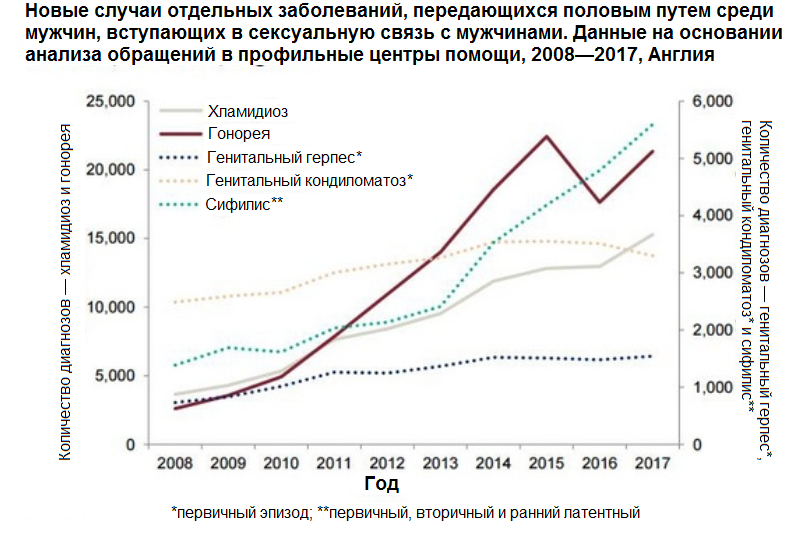
And, here to comment. The diagnosis is clear the customer is known.
In war as in war.
Your articles are always useful.